
 Whitehaven coal
7 May 2026
Multi-skilling at Whitehaven: one operator, many roles
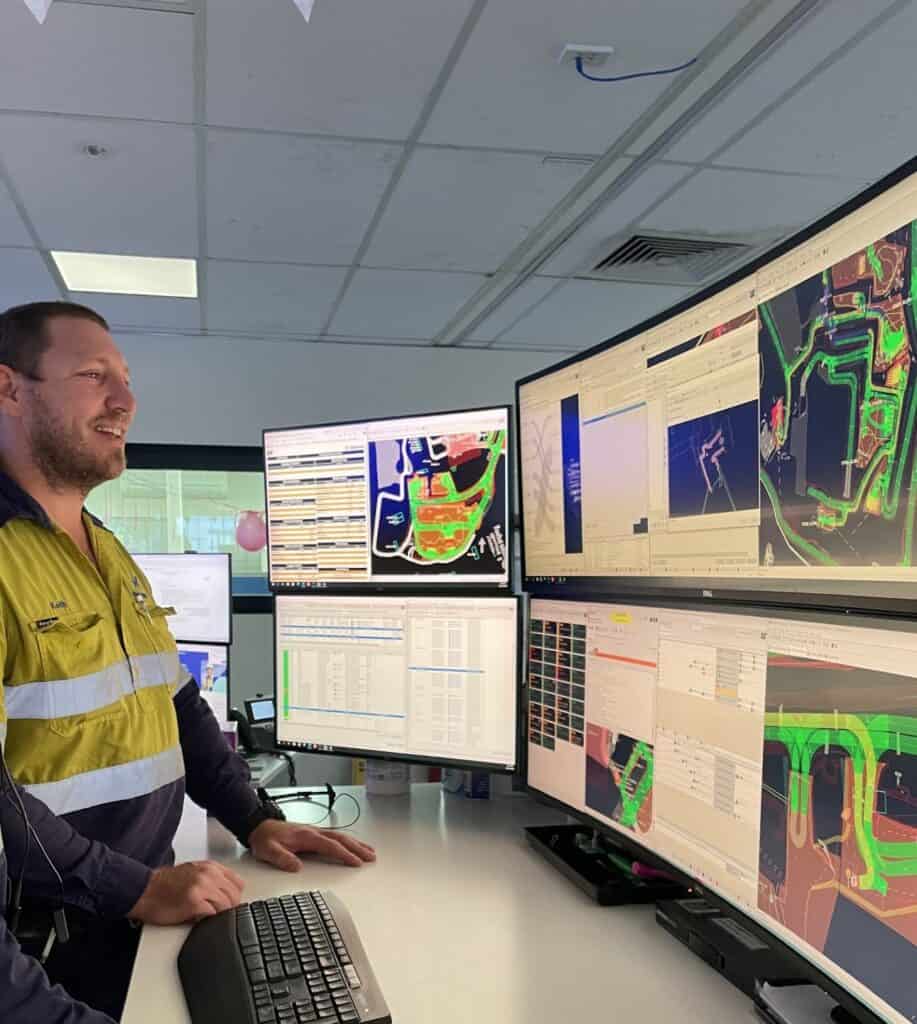
A new operator development initiative at Whitehaven is expanding skill sets across the workforce.
The Whitehaven Multiskilling Program, launched at Whitehaven’s Daunia mine in 2025, gives operators the chance to broaden their skills and work across different roles as the operation continues to evolve. It’s about building capability on site so the workforce can adapt to changing demands while keeping operations running safely and efficiently.
Keith Berger is one of the first employees to gain new skills through the multi-skilling program. Keith started in civil construction at 18, spent time working in Western Australia to get a taste of FIFO life, and in 2014 found himself at Daunia. Twelve years later he’s still there and now he’s among the first operators to take part in Whitehaven’s Multiskilling Program.
The program was originally piloted and focused on developing autonomous haulage system (AHS) operators who can work across multiple functions. For Keith, the opportunity came down to experience.
“They wanted people with pit knowledge and machinery knowledge to get upskilled,” he says.
“The people who already understand how the mine works are best-placed to work with the technology.”
Keith spent years operating one of the most complex machines on site; the electric rope shovel and has been loading trucks since 2017. When the expression of interest for the program came up, he put his hand up. Not because he was looking for a change from the shovel.
“The shovel was such a nice machine. I’d still be on it,” he says. “But I always wanted to see the background of everything that happens.”
That decision led to a six‑month secondment about a year ago. Keith was one of the first two operators selected for the program, with a further three joining since. He has since transitioned to a staff position as an AHS operator and is working through structured training across three functions.
Under Whitehaven’s broader multiskilling framework, operators progress through clear capability stages, from foundation and development through to established competency supported by personalised training plans, time‑on‑task, and formal verification of competency. Training is designed to be integrated into normal rosters, balancing operational needs with individual development.
The immediate benefit for the business is flexibility. If crews are short in the pit, Keith can step back into production. But the longer‑term goal is deeper capability across the workforce; operators who understand not just how to carry out tasks, but how different parts of the operation connect.
Keith is realistic about how long that takes, estimating it’ll be a couple of years before he feels fully across everything, and he’s comfortable with that pace.
“Anyone can move something from here to there,” he says. “But to think forward, to be proactive, that takes years of doing the same job.”
For anyone considering mining as a career, Keith has a clear recommendation: Start at an autonomous site.
“Having watched the technology evolve from its early days, which was a little bit clunky, to today’s precision systems, has been eye-opening.
“I’m a firm believer in both the safety and consistency automation delivers.”
It’s not a view that diminishes the people who drove the trucks before. “We had awesome truckies,” he says. “There’s nothing wrong with the people, it’s just the direction things have gone.”
“The robots are predictable,” he adds. “You know what they’re going to do. That’s what makes it safe.”
As for what keeps people at Daunia long‑term, Keith believes it’s the crew, the work, and the roster. Having worked four‑and‑one and three‑and‑one rosters earlier in his career, he appreciates the difference a 7/7 can make.
“You’re away from home, but when you come home, you have the opportunity to be fully invested in home life.”
For Keith, the multi‑skilling program is about building on the experience he’s gained at Daunia and contributing in new ways as the operation continues to evolve. It recognises the value of people who know the pit, understand the equipment, and are willing to keep learning to support safer, more consistent outcomes on site.
Back to News