
 Whitehaven coal
10 August 2026
Exploring AI through a Practical Lens
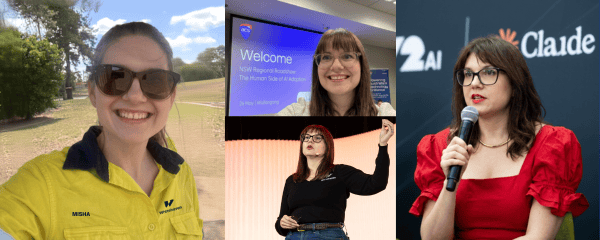
When Misha Fazen talks about artificial intelligence, she starts with a simple question. “What problem are we actually trying to solve?” Then she listens.
It’s an approach that has guided Misha through a career spanning mining, technology, construction, oil and gas, and she now brings this method to Whitehaven’s systems, data and emerging technologies strategy.
As Group Manager Systems, Performance and Data Analytics HSE, Misha leads a team focused on improving how information is managed and used across the business. Whether it’s implementing new systems, enhancing processes or exploring AI opportunities, the goal remains the same: finding practical solutions that make work easier, safer and more effective.
Originally from the southwestern United States, Misha moved to the United Kingdom at 18 to study finance and international business. After graduating during the Global Financial Crisis, she and her Australian husband looked further afield for opportunities and eventually settled in Perth.
Before joining Whitehaven more than three years ago, Misha worked for Fortescue, GE and a range of organisations delivering large-scale systems and business improvement projects.
“When I came into Whitehaven, there was a lot of focus on stabilising and improving our systems and processes,” Misha said.
“Once we had those foundations in place, we could start looking at how we prepare the business for the future and support its continued growth.”
That future increasingly includes artificial intelligence, but Misha believes successful AI projects begin long before any technology is introduced. Drawing on experience across mining and large-scale business transformation projects, she sees AI not simply as another software tool, but as a business and cultural shift that requires careful planning, communication and critical thinking.
“We don’t implement technology for the sake of it,” she said.
“We sit down and listen. What is the problem you’re trying to solve? What’s slowing you down? What’s not working? Once you understand those things, you can start identifying opportunities.”
Misha says one of the biggest misconceptions about AI is that the tool itself will solve business challenges.
“People often start with the tool instead of the problem,” she said.
“The first question should always be what outcome we’re trying to achieve and what’s creating the issue today. Once you understand that, then you can work out whether AI is part of the solution.”
She believes organisations often underestimate the impact new tools and ways of working can have on teams and individuals.
“Implementation is really about people, processes and change,” she said. “The software is only one element.”
One example is a document processing solution developed to support the management of employee medical records. The task previously required significant manual review, despite only a small percentage of records requiring closer assessment.
By automating routine processing and directing attention to exceptions, the solution allows employees to spend more time on higher-value work.
For Misha, success is measured by outcomes rather than the tools being used.
“A lot of AI projects are introduced because they’re new or exciting,” she said.
“For us, the question is always whether it’s solving a real problem and delivering measurable value.”
Her team’s work also includes helping employees build the skills and confidence to use AI effectively and responsibly. Through training focused on critical thinking, employees are encouraged to understand where AI can add value and where human judgement remains essential.
Misha and her team regularly visit Whitehaven’s sites to talk with employees about large language models, responsible AI use and how to evaluate AI-generated outputs.
“AI doesn’t have the experience or context that people have,” Misha said.
“It hasn’t been to a mine site. It doesn’t understand the history behind a decision, the conditions, or the factors that influence how people behave. That’s why human insight remains so important.”
The same principles are helping shape Whitehaven’s approach to safety and performance data. By improving the way information is captured and analysed, the team is helping turn data into meaningful insights that support better decision making.
For Misha, the goal is not to replace human judgement, but to provide people with better tools while retaining the context, experience and critical thinking needed to make good decisions.
Beyond her role at Whitehaven, Misha regularly shares her insights on data, safety and organisational change at conferences and industry events across the resources sector.
She is also passionate about mentoring and developing future leaders.
Misha mentors through both the Women in Mining and Women in Technology programs, supporting women at different stages of their careers through one-on-one mentoring, group networking sessions and leadership development discussions.
Much of that work focuses on communication, confidence and helping women navigate challenges they may encounter in traditionally male-dominated industries.
“A lot of the mentees I work with are looking to build confidence, communicate more effectively or learn how to set boundaries as they balance career and personal commitments,” she said.
Misha’s passion for mentoring stems partly from her own experience early in her career, when a senior leader took the time to guide and support her.
“She taught me how to communicate in this industry, how to approach difficult conversations and how to influence outcomes without being aggressive,” Misha said.
“You don’t learn those skills at school, and having someone willing to share their experience made a huge difference.”
At home, Misha and her husband balance demanding careers while raising four children. It’s a challenge she approaches in much the same way she approaches her work: through planning, communication and teamwork.
“I want my children to see that both women and men can have rewarding careers and share responsibilities at home,” she said.
“If they see women in leadership positions, it helps broaden their view of what’s possible. It’s important for young women, but it’s important for young men too.”
As artificial intelligence continues to evolve, Misha believes the biggest opportunities will come from combining new capabilities with human experience and judgement.
“It’s not about using technology because it’s available,” she said.
“It’s about understanding what people need and using the right tools to help them achieve it.”
For someone who spends much of her time helping teams solve problems, mentoring future leaders and exploring what’s next for the industry, it’s an approach that continues to shape her work across Whitehaven.
Back to News