
 Whitehaven coal
18 August 2026
Building relationships that last
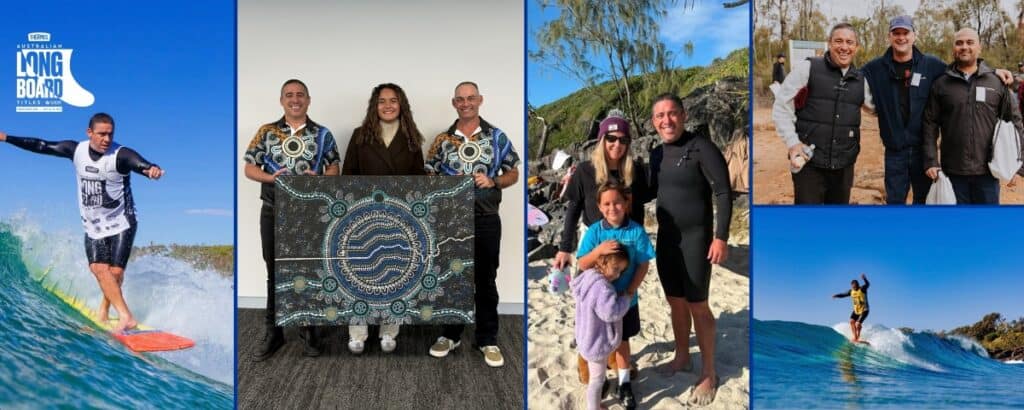
For Whitehaven’s Indigenous Engagement Manager Ben Proudfoot, relationships are at the core of everything he does.
From growing up in a small coastal community in northern New South Wales, to competing as a professional surfer, and working alongside Traditional Owners across some of the country’s largest mining regions, Ben has learned that meaningful outcomes are built on genuine connections.
Today, Ben leads Indigenous engagement for Whitehaven’s Queensland operations, helping build partnerships with Indigenous communities that will last long beyond the life of any mine.
Born in Casino, Ben grew up in Pottsville, a small coastal town in northern New South Wales. His mother is a Coodjinburra (Tweed Coast) woman of the Bundjalung Nation, while his father’s family has Scottish heritage and a long history of dairy farming around Murwillumbah.
“It was a pretty isolated, small coastal town at that time with the closest city being Brisbane 130km away,” Ben said.
“My dad’s family were dairy farmers around Murwillumbah and were fortunate enough to grow up in Pottsville.”
Sport played a big role in Ben’s childhood. While he enjoyed a range of sports including hockey, rugby league, union, soccer and swimming growing up, it was surfing that quickly became a passion.
By his late teens and early twenties, Ben was competing professionally, travelling to surf competitions around Australia and building friendships with people from across the world. Still a keen surfer, Ben was the Australian Longboard Champion in the Over-40s division in 2025 and runner up in 2026.
“I’ve always loved sport,” he said. “Surfing, swimming, running. I just enjoy being active.”
After competing in the Noosa Festival of Surfing at age 21, a visit to a friend in Perth changed the course of his life.
“I went over for two weeks and ended up living in Western Australia for 17 years.”
Before entering mining, Ben worked in architecture and design, enjoying the creative and collaborative nature of the industry. But when friends working in mining encouraged him to explore opportunities, he decided to give it a try.
Ben’s first role was with Fortescue Metals Group as a grade control specialist at Christmas Creek in the Pilbara.
“It felt like I was crossing to the dark side,” he said.
“You hear a lot of perceptions about mining until you actually experience it for yourself.”
The role provided an introduction to exploration, mine development and the complexities of operating in remote environments. It also gave him his first exposure to working closely with cultural heritage teams and Traditional Owners in the mining sector.
After 18 months, Ben moved into mine planning before an opportunity arose in community and Indigenous engagement. Based in Port Hedland, he spent five years working across the Pilbara, engaging with Traditional Owner groups and local communities throughout the region.
“It was such a fantastic opportunity,” he said.
“You were working with some of the most sophisticated and complex Native Title groups in Australia, where people are still fortunate to be practising lore and culture and speaking their traditional language with English as second language, which made the work challenging but also extremely humbling.”
It was during his time in the Pilbara that Ben developed the approach that continues to guide his work today.
“Relationships that are built well are never just about agreements or paperwork,” he said. “A lot of the time it’s simply sitting down and having a cup of tea and not talking about work at all.”
Ben recalls driving between towns across the Pilbara and stopping in to check on people, sometimes for a quick five-minute chat and other times for several hours.
“Those conversations help you understand what people’s aspirations are and what’s really important to them.
“An Elder once said to me, ‘Business is a soulless beast, but it’s the people who make it up.’ That’s always stayed with me.”
Following five years with Fortescue, Ben returned to Queensland with his wife Jess, whom he met in Port Hedland. Jess, a cultural heritage specialist with BHP, secured a transfer to Brisbane, creating an opportunity for the couple to move closer to family before starting their own. Ben and Jess now have two children, Elke and Asha.
Ben joined BHP, where he initially worked in cultural heritage and Indigenous engagement across Queensland and New South Wales operations. He later moved into a global Indigenous engagement leadership role, helping integrate teams and support workforce transitions during major organisational changes.
After more than five years with BHP, a call from Whitehaven presented a new challenge. Ben joined Whitehaven almost two years ago and has since led Indigenous engagement across the company’s Queensland operations.
“Our team is essentially the go-between for Whitehaven and the Indigenous communities where we operate,” he said.
“It’s about listening, building relationships, helping connect people to opportunities and ensuring Indigenous perspectives help inform the way we work and make decisions.”
The role also includes supporting agreement-making, cultural heritage management and developing long-term partnerships with Traditional Owners.
One of the most rewarding aspects of Ben’s work is seeing positive outcomes flow back into communities.
“For some people, employment opportunities the business provide may be their first exposure to long-term work and the opportunity to be in control of their own destiny,” he said.
“You see people gain skills and confidence that can create intergenerational change for their families and community.”
It is one of the reasons Ben was attracted to Whitehaven.
“I’ve always believed in the positive impact that responsible mining can have through employment, business opportunities and community partnerships.
“And these relationships don’t stop. Whether it’s Blackwater, Winchester South or Daunia, we’ll be engaging with Indigenous communities throughout the life of those operations and beyond.”
Back to News